Aertek

Drone Hazardous Residue Removal: A Safer Approach to Industrial Asset Maintenance

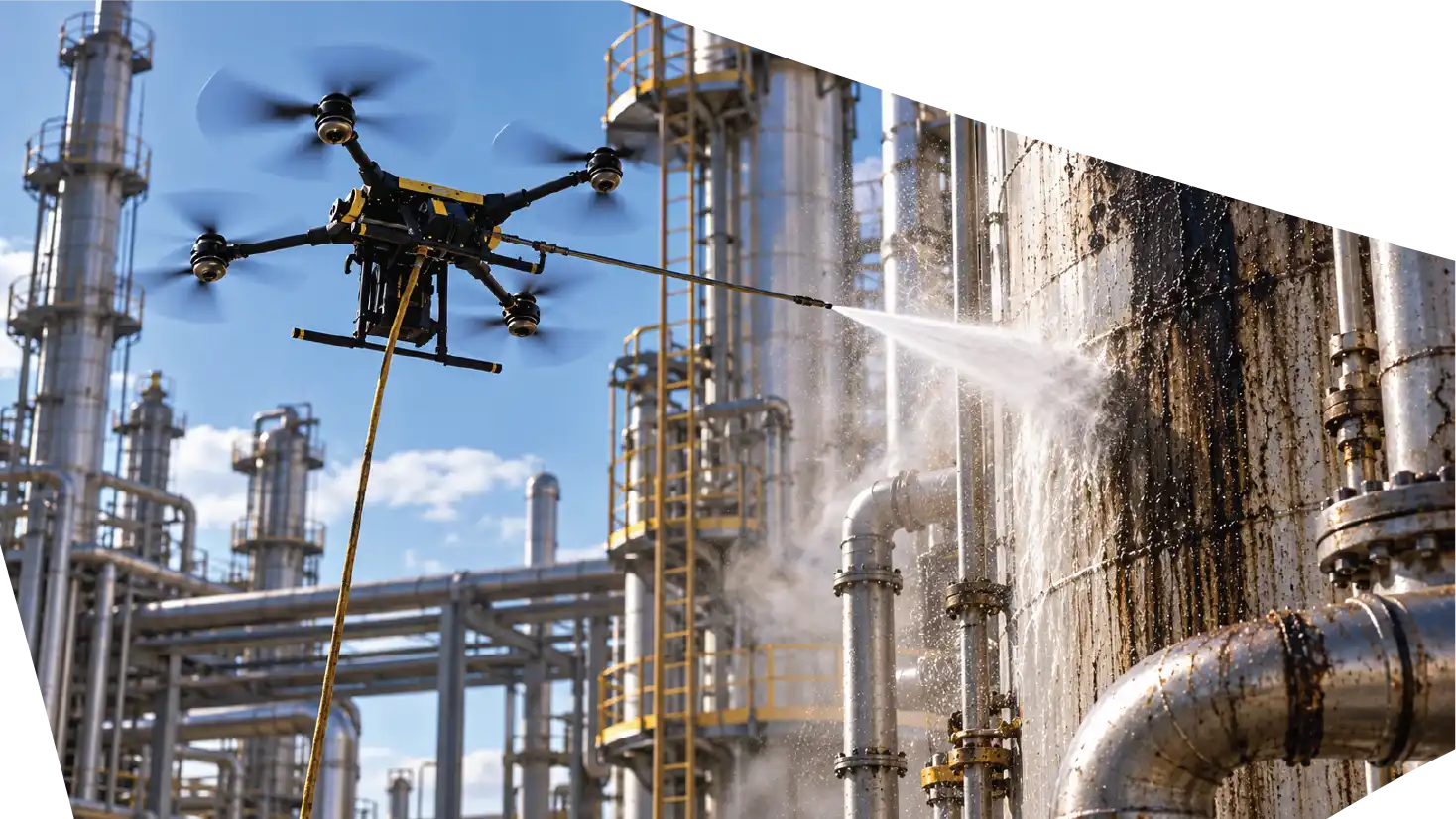
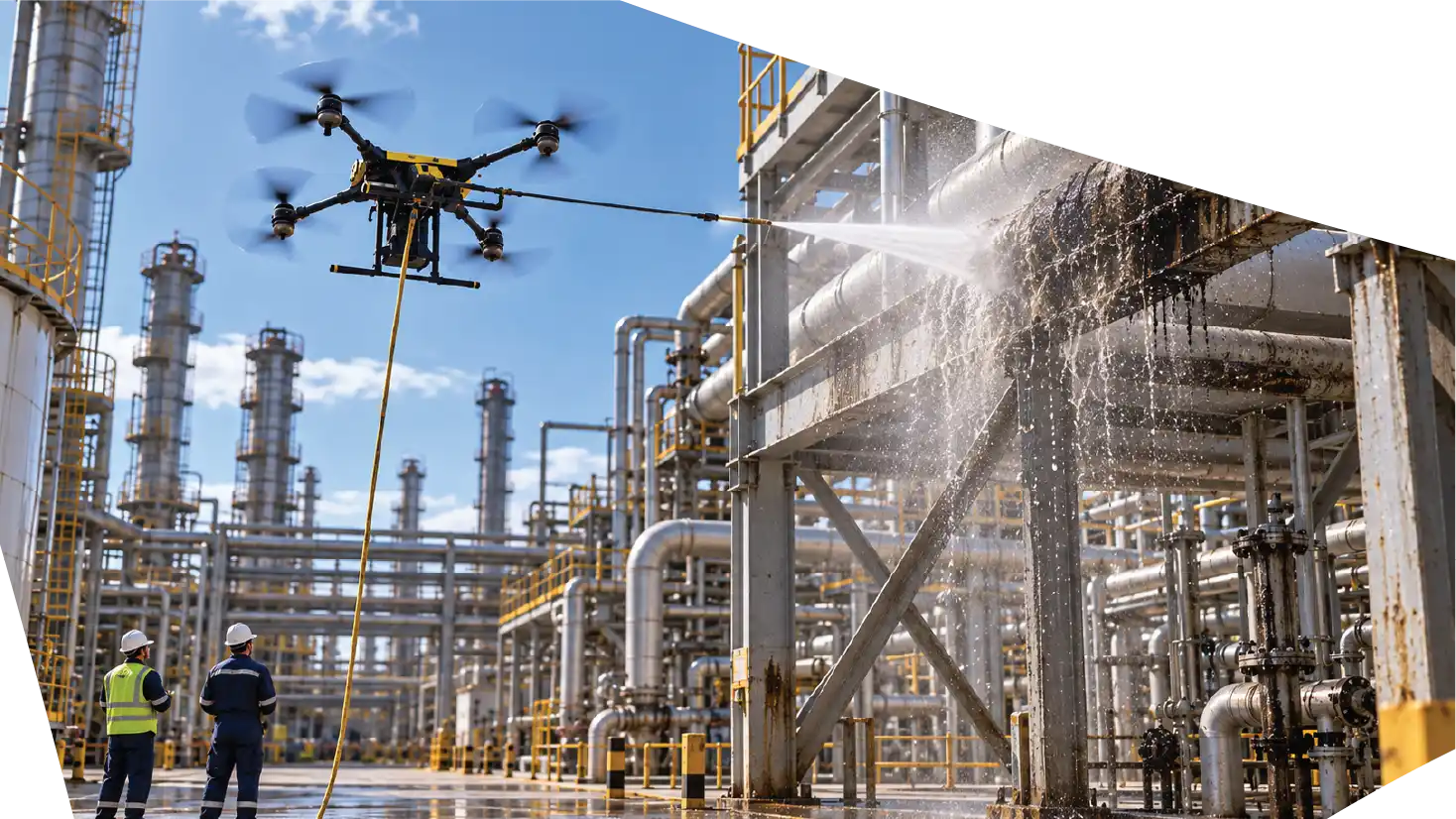
Drone Hazardous Residue Removal is creating a new way for industrial operators to address difficult surface contamination without relying exclusively on personnel working at height, near hazardous buildup, or in hard-to-access areas. In facilities where chemical residue, salts, soot, process deposits, grime, or other unwanted materials can accumulate on structures and equipment, aerial robotic systems can extend maintenance capabilities while helping reduce unnecessary human exposure.

For industrial plants, utilities, aerospace facilities, manufacturing sites, and other critical infrastructure, residue removal is more than a cosmetic task. Deposits left on structural surfaces can interfere with inspections, accelerate deterioration, trap moisture, contribute to corrosion, or make future maintenance more difficult.

Aertek approaches hazardous residue removal as a precision maintenance application. By combining specialized aerial platforms, controlled application systems, site-specific procedures, and appropriate cleaning chemistry, organizations can address challenging surfaces more efficiently while keeping technicians focused on supervision, planning, and validation.

Why Hazardous Residue Is an Asset Management Problem

Industrial environments naturally create difficult surface conditions. Equipment operates continuously, materials move through processing systems, weather affects exterior assets, and emissions, salts, dust, oils, soot, and other contaminants can accumulate over time.

These deposits may appear on storage tanks, structural steel, walls, roofs, industrial equipment housings, elevated piping, support structures, towers, and other assets.

When residue remains in place, it can hide the true condition of the underlying surface. Inspectors may have difficulty identifying corrosion, cracks, coating failures, staining, or other forms of deterioration. In some cases, buildup may also retain moisture or accelerate damage to protective coatings.

Removing the residue can therefore become an important step in inspection and maintenance.

The challenge is that the surfaces most in need of cleaning are often the most difficult to reach.

The Limitations of Traditional Access

Conventional industrial cleaning frequently depends on scaffolding, lifts, rope access, ladders, or personnel working directly beside the target surface.

These methods remain necessary for many tasks, but they also introduce additional planning and exposure.

Before cleaning begins, a team may need to mobilize access equipment, establish safety zones, coordinate shutdowns, reposition machinery, or prepare workers for elevated operations.

On large structures, the access process can take longer than the cleaning itself.

A drone-based system changes this relationship.

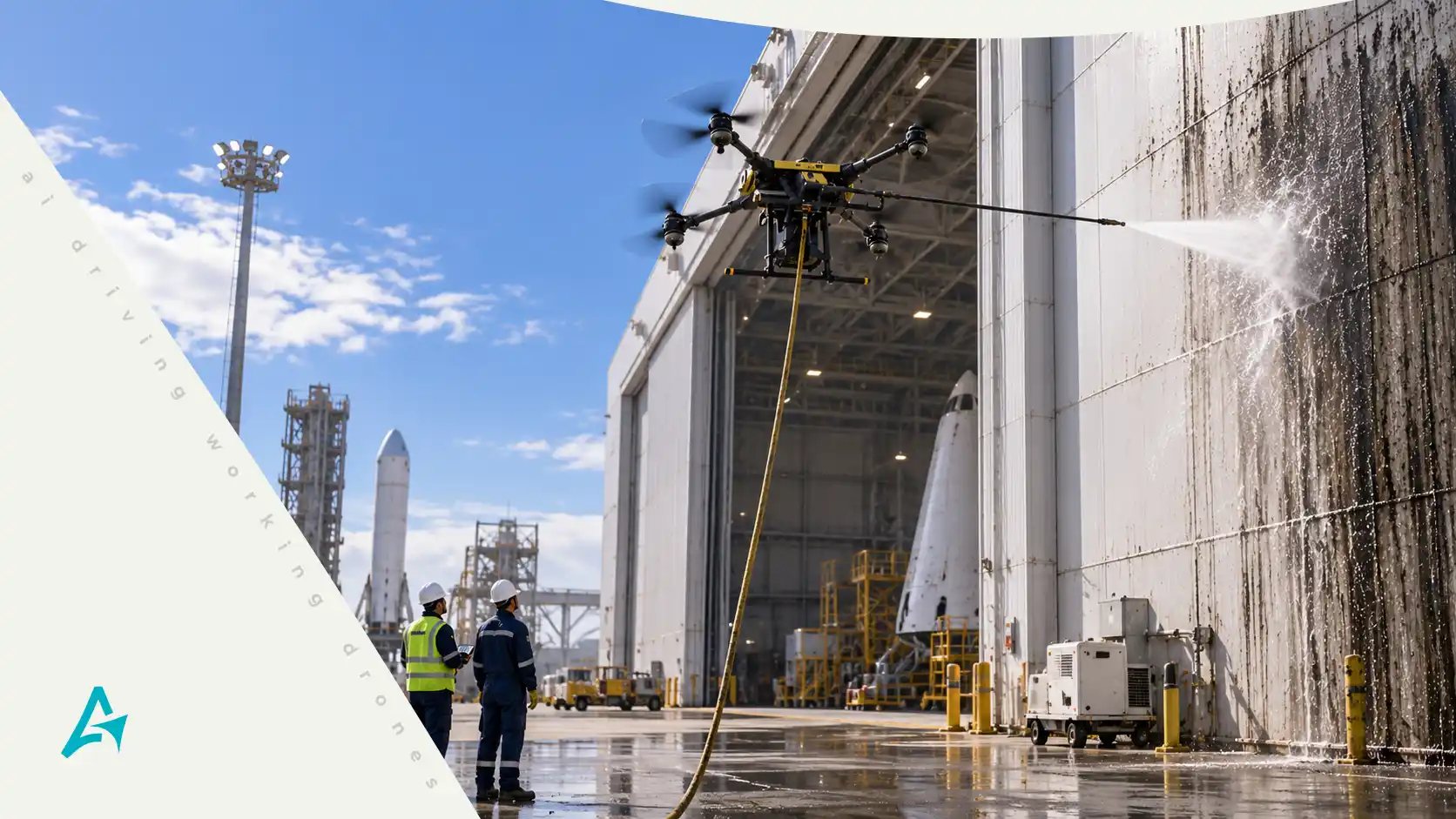
Instead of placing a technician at every treatment point, the cleaning equipment can be moved toward the surface using an aerial platform. Operators remain responsible for the mission, but they can perform more of the work from a controlled location.

This can be particularly useful on large vertical surfaces, elevated structural elements, tanks, facades, and other areas where conventional access becomes complex.

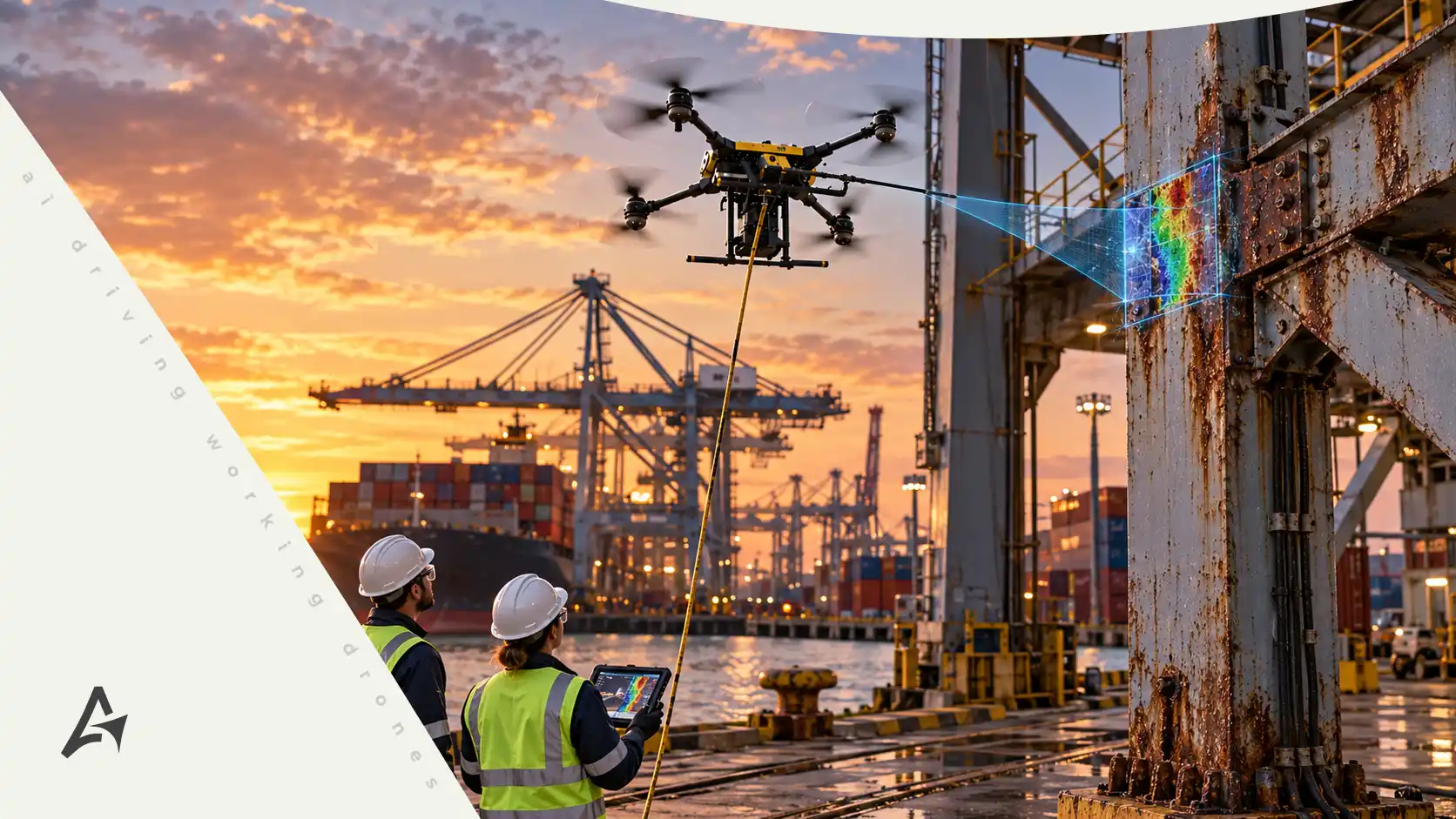
aertek-drone-hazardous-residue-removal-industrial-assets

Reducing Direct Worker Exposure

Hazardous residue removal can involve more than height.

Depending on the facility, personnel may also work near accumulated industrial deposits, process residue, contaminated runoff, or surfaces that require specialized protective procedures.

Aerial robotics can create physical separation between workers and the treatment area.

The drone carries the application system. The operator controls or supervises the mission. Supporting personnel manage chemistry, safety boundaries, equipment, and post-treatment assessment.

This does not eliminate industrial safety requirements.

It changes where people need to be during the physical application.

The goal is to reduce unnecessary exposure while preserving human judgment and control over the operation.

aertek-drone-hazardous-residue-removal-industrial

Precision Application Instead of Broad Cleaning

One of the most important differences between robotic cleaning and conventional washing is the ability to approach the task as a controlled treatment mission.

Not every structure requires the same pressure, chemistry, flow rate, standoff distance, or application pattern.

Aertek’s approach is based on matching the cleaning method to the surface and residue.

Aerial platforms can be configured to move across a defined treatment zone while maintaining controlled positioning relative to the target. Operators can focus on specific sections rather than treating an entire structure indiscriminately.

This precision matters in facilities where nearby equipment, coatings, joints, sensors, or materials may require careful treatment.

The objective is not simply to spray a surface.

It is to deliver the appropriate treatment in the right location with the minimum amount of unnecessary intervention.

Protecting Storage Tanks and Large Industrial Surfaces

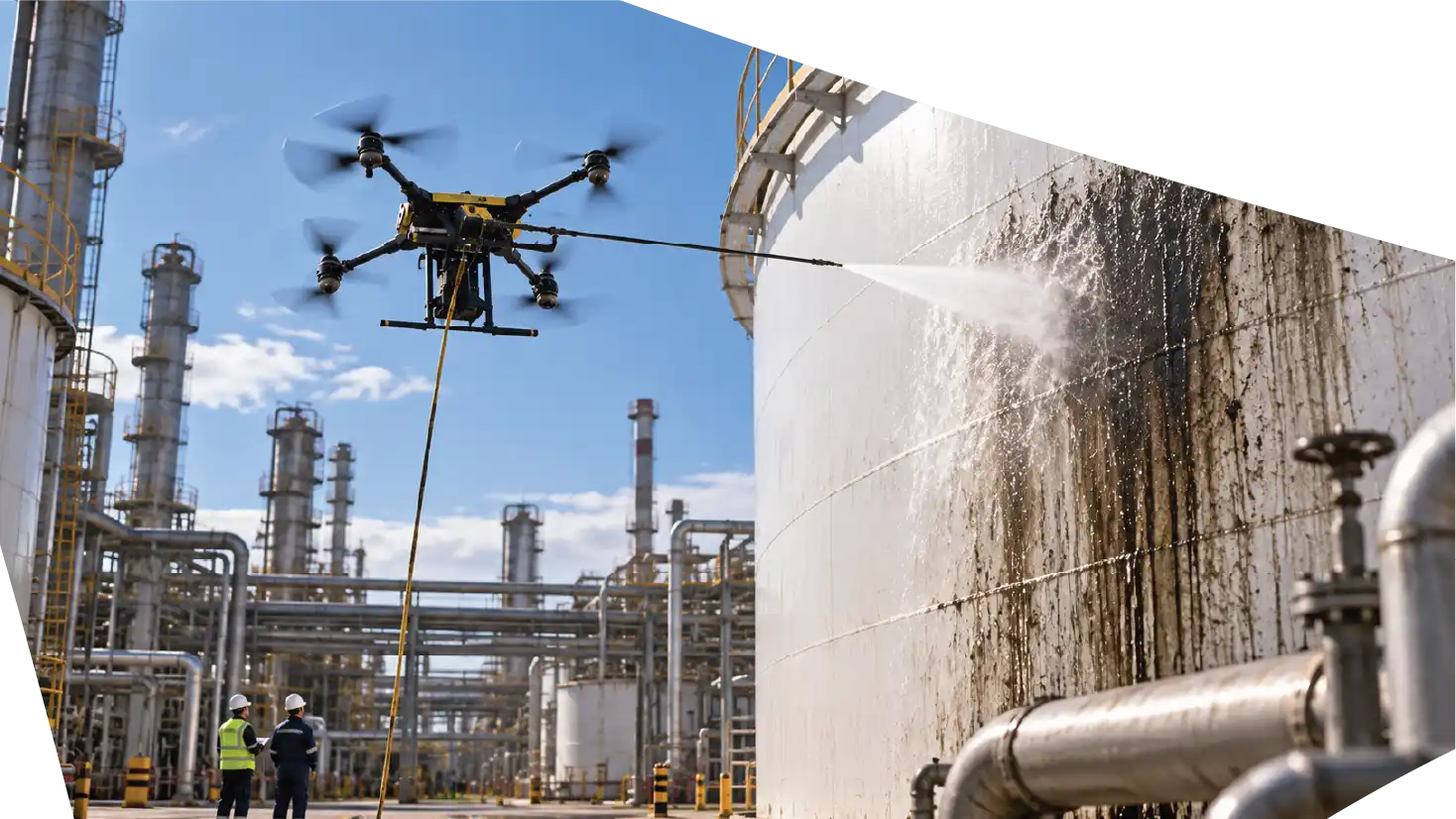
Storage tanks are a strong example of where drone hazardous residue removal can provide operational value.

Large tanks may present extensive vertical surfaces exposed to weather, salt, dust, industrial emissions, and other environmental conditions. Their size can make conventional cleaning slow and access-intensive.

A drone can move across the exterior surface without requiring workers to reach every section from a lift or suspended platform.

The same concept can apply to silos, process vessels, large industrial walls, towers, and exterior structural surfaces.

Cleaning these assets can improve visibility before inspection and make it easier for maintenance teams to identify coating degradation, corrosion, surface damage, or areas requiring additional attention.

In this way, residue removal can support the broader inspection process.

Preparing Surfaces for Inspection and Maintenance

Industrial inspections are only as useful as the visibility available to the inspector.

A surface covered by heavy residue may hide important details.

Before performing high-resolution imaging, corrosion assessment, coating inspection, or other evaluation, organizations may benefit from removing deposits from targeted areas.

Drone cleaning and drone inspection can therefore operate as complementary services.

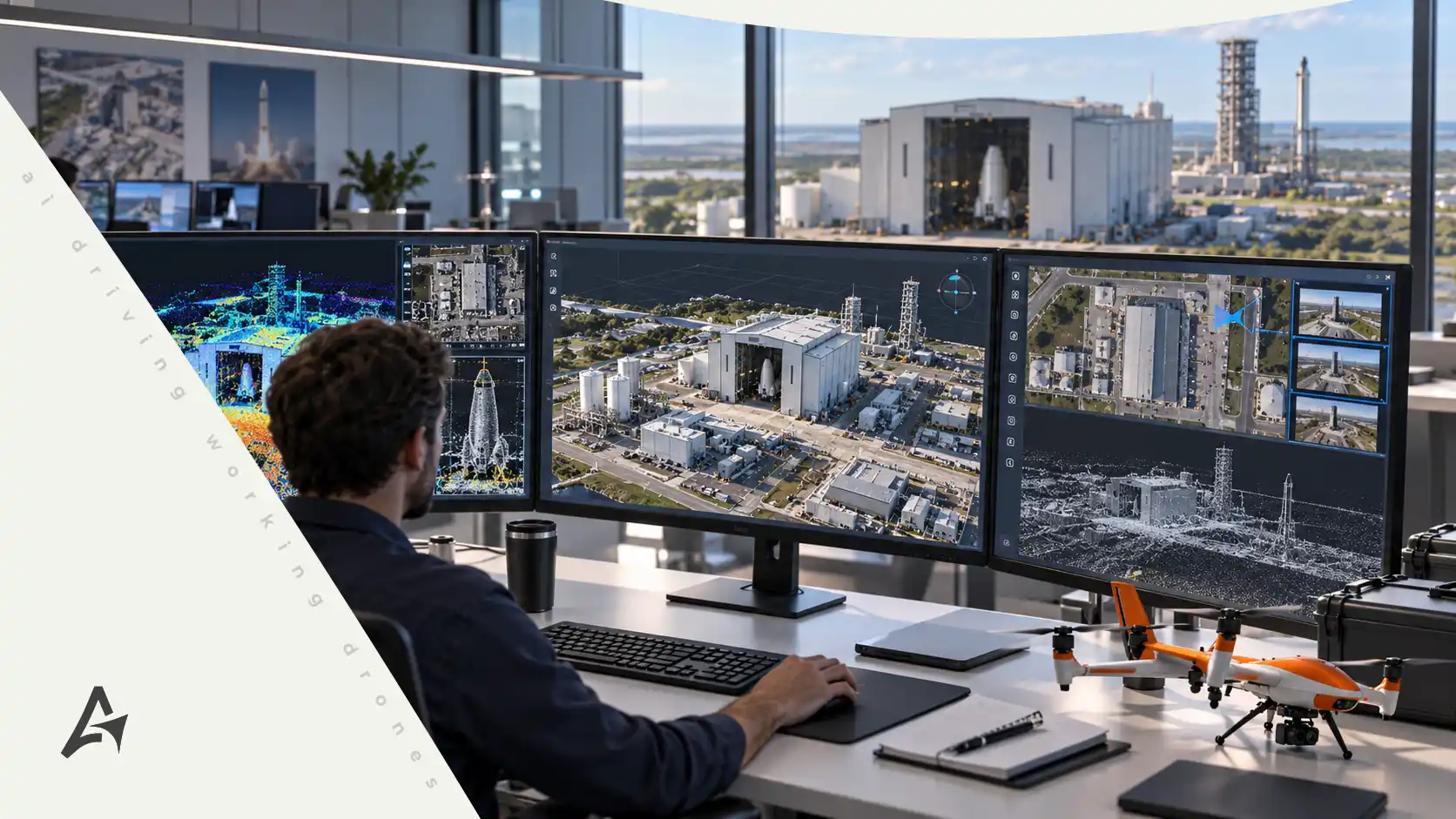
A maintenance workflow might begin with aerial documentation of the asset. Selected areas can then be cleaned using an appropriate robotic application system. After treatment, the surface can be inspected again with high-resolution cameras or other sensors.

This sequence can help teams move from a contaminated surface to a clearer understanding of asset condition without automatically requiring direct human access at each stage.

aertek-drone-hazardous-residue

Applications Across Critical Infrastructure

Hazardous residue removal can support a wide range of industrial environments.

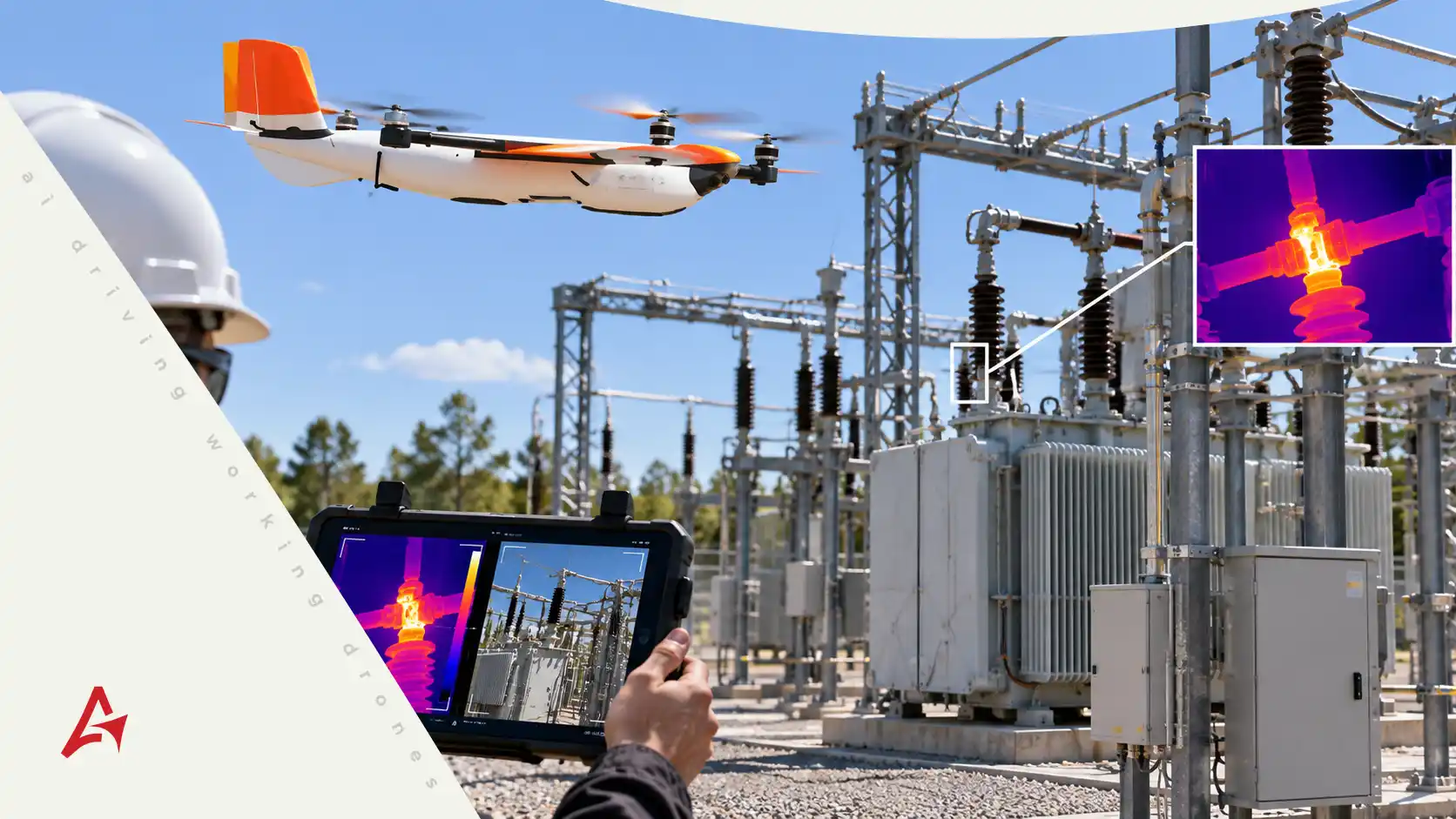
In energy and utility facilities, drones may be useful around large structures, elevated surfaces, and selected exterior assets. In manufacturing environments, they can help address buildup on hard-to-reach structural surfaces. Aerospace facilities may use robotic cleaning around large buildings, hangars, elevated structures, and support infrastructure.

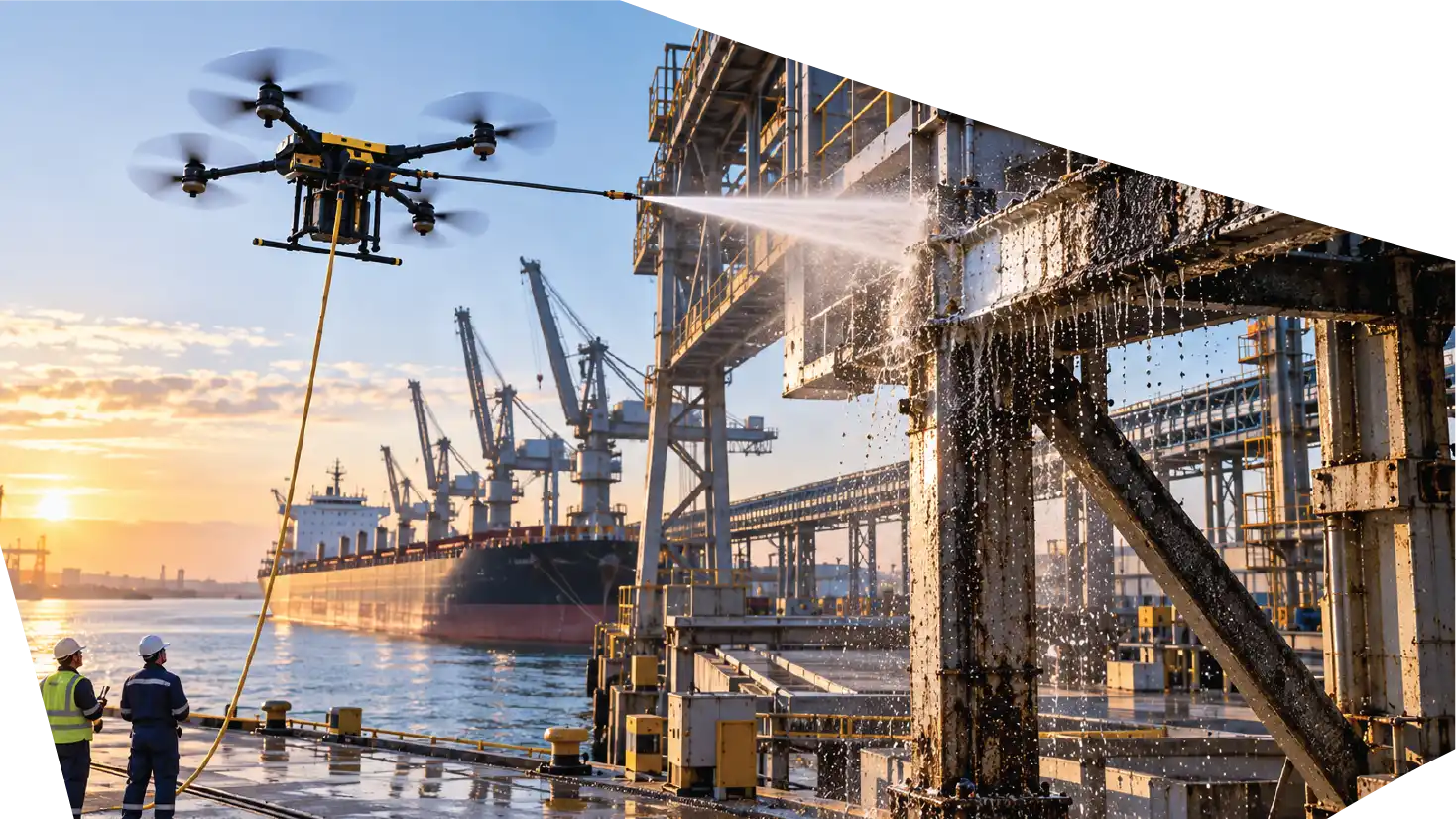
Ports, logistics centers, transportation facilities, and other coastal infrastructure may also experience salt deposits and environmental contamination that can affect exposed surfaces.

The exact method will depend on the residue, surface material, operating environment, and facility requirements.

For this reason, site assessment and treatment planning are essential before deployment.

drone-hazardous-residue-aertek

Supporting Better Use of Maintenance Crews

Industrial maintenance teams are highly skilled resources.

Using experienced personnel primarily to access large surfaces for repetitive cleaning may not always be the most effective use of their time.

Robotic systems can help redistribute that workload.

Technicians remain responsible for understanding the asset, defining the treatment requirement, monitoring the system, and evaluating the result. The drone handles suitable portions of the physical application.

This allows human expertise to stay focused on tasks that require judgment.

For organizations facing labor constraints, large maintenance backlogs, or extensive infrastructure portfolios, that shift can create meaningful operational value.

Creating Repeatable Cleaning Programs

A one-time cleaning mission solves an immediate problem.

A repeatable program can support long-term asset care.

Once a facility identifies the structures that regularly accumulate residue, teams can develop treatment intervals and standardized workflows around those assets.

Flight paths, application parameters, safety procedures, photography, and maintenance records can become part of a recurring process.

Over time, this provides better documentation of how surfaces are being maintained.

It also makes it easier to compare asset condition between maintenance cycles.

Drone hazardous residue removal can therefore become part of preventive maintenance rather than remaining an emergency response to excessive buildup.

Reducing Setup and Downtime

Maintenance downtime is a major concern in industrial environments.

Access equipment can occupy work areas, interfere with traffic, and require time for mobilization and repositioning.

A drone-based cleaning operation still requires site preparation, safety controls, and mission planning, but it may reduce the amount of physical access infrastructure required for suitable tasks.

That can help facilities complete targeted maintenance with less disruption.

The benefit becomes especially important when the asset does not need a full shutdown or when the cleaning task is limited to selected exterior or elevated surfaces.

Reducing unnecessary setup can make recurring maintenance easier to schedule and repeat.

Reducing Setup and Downtime

Aertek’s broader approach to autonomous maintenance connects physical work with digital information.

A drone mission can begin with imagery that documents existing conditions. Treatment can then be performed on selected surfaces. Follow-up imagery can record the cleaned asset and support future comparison.

When combined with mapping, digital twins, or inspection records, these missions can become part of the asset’s digital history.

This creates a larger workflow:

Inspect
Identify
Treat
Verify
Document

Over time, organizations can understand which assets accumulate residue fastest, which locations require recurring treatment, and where maintenance priorities may need to change.

The result is a more informed approach to industrial cleaning.

Aertek’s Approach to Hazardous Residue Removal

Aertek focuses on using autonomous systems where they provide a practical operational advantage.

For hazardous residue removal, that means evaluating the asset, access conditions, surface material, residue type, application requirements, and safety constraints before determining how the mission should be performed.

The objective is not to replace every traditional cleaning method.

Some tasks will always require direct manual work.

The opportunity is to identify areas where aerial robotics can reduce difficult access, improve consistency, and keep personnel farther from the physical treatment zone.

By integrating robotic mobility with controlled application systems, Aertek can help organizations approach industrial cleaning as a precision maintenance process.

Ready to Protect Your Critical Infrastructure?

Partner with AERTEK for autonomous exterior cleaning, infrastructure washdowns, specialized decontamination, facility maintenance, and digital reporting designed to improve safety, efficiency, and operational readiness.