Aertek

Autonomous Decontamination for Critical Infrastructure: A Safer Path to Mission-Ready Operations

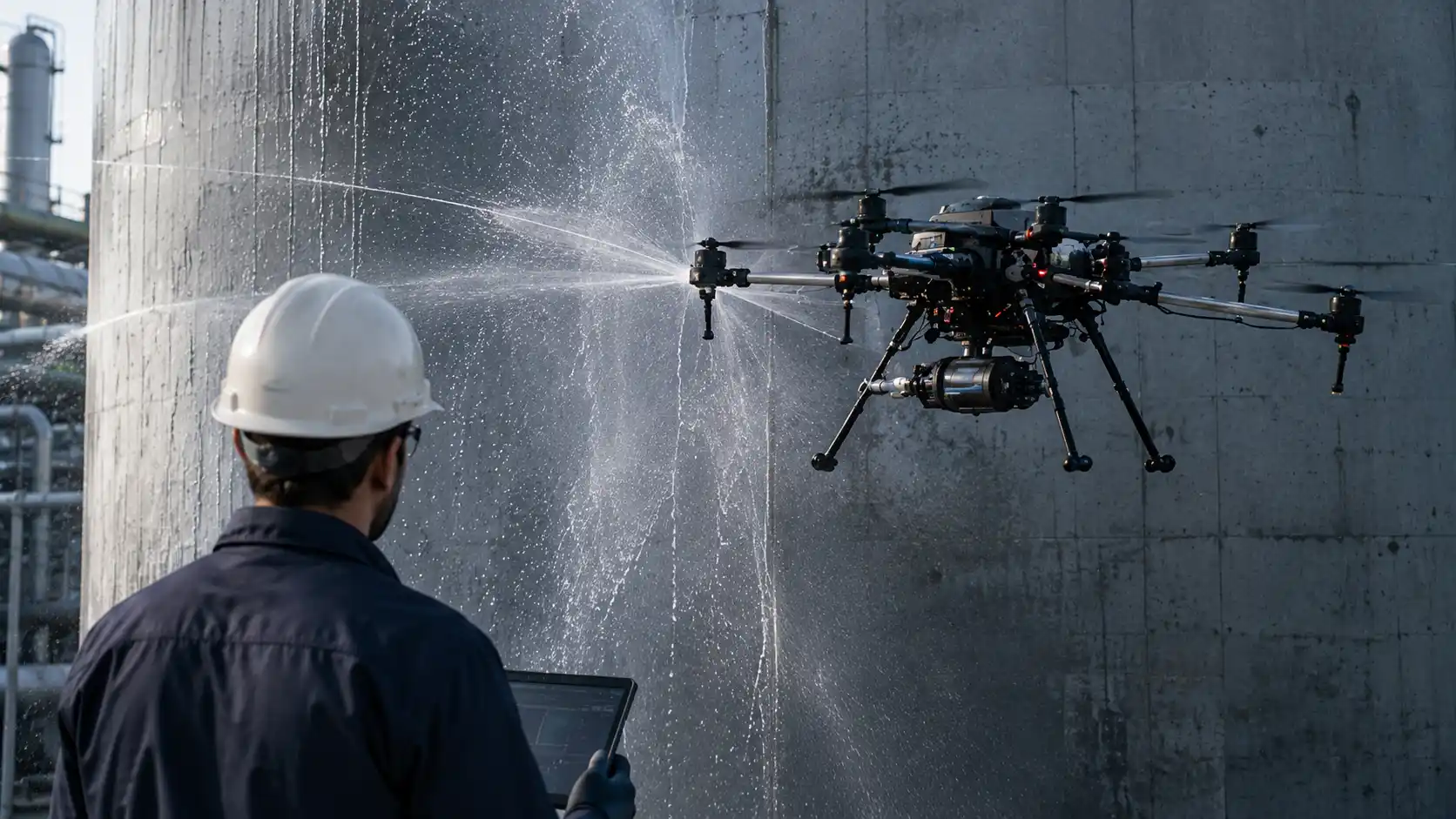
Autonomous Decontamination for Critical Infrastructure is changing how organizations can approach the cleaning, treatment, and maintenance of complex facilities where safety, access, consistency, and operational readiness matter. Instead of relying only on personnel for repetitive or difficult decontamination tasks, autonomous drones and robotic systems can extend the reach of maintenance teams while helping reduce direct human exposure to challenging environments.

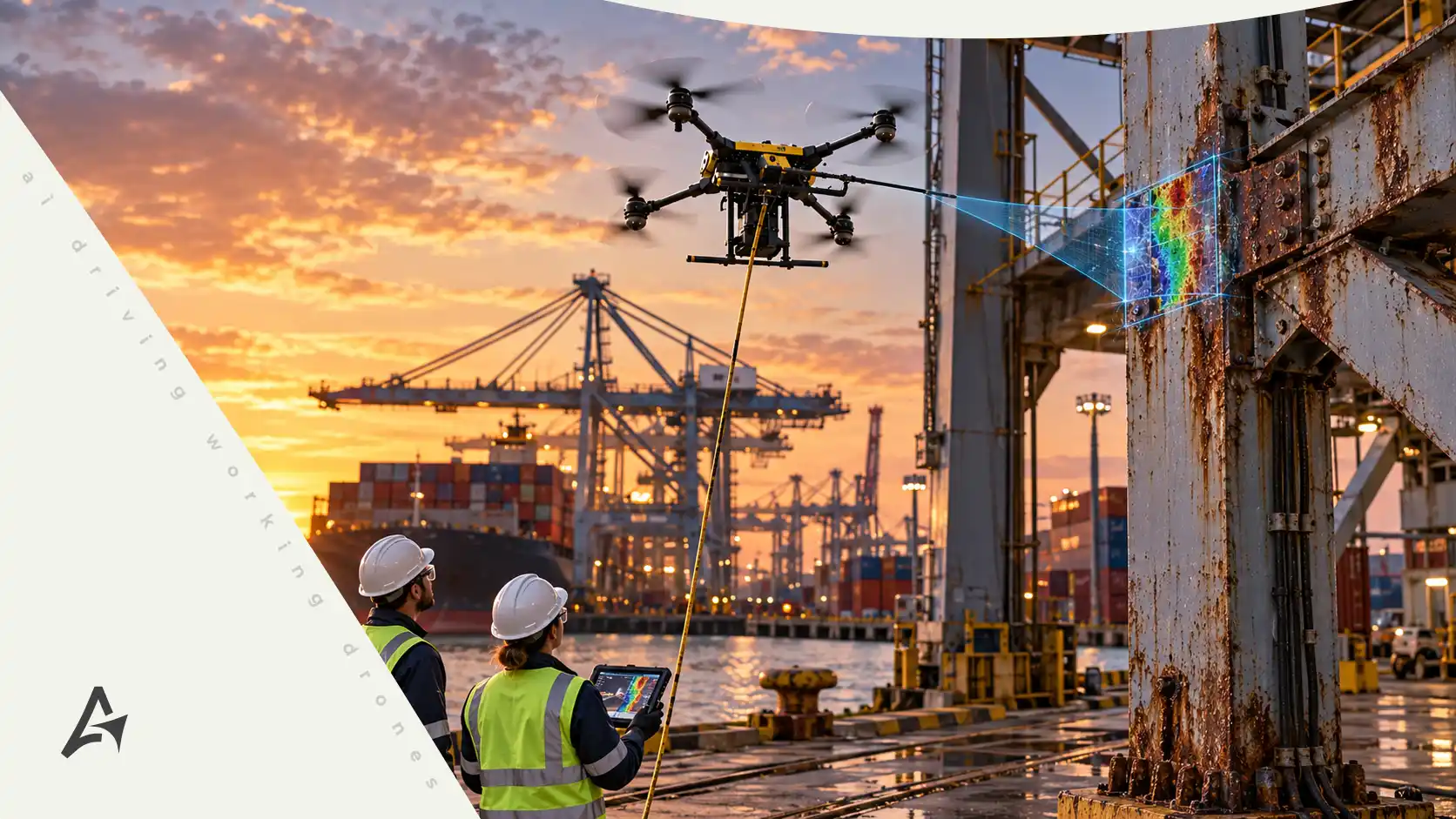
Aertek is developing autonomous robotic capabilities for decontamination applications with a focus on critical infrastructure. By combining aerial robotics, autonomous application methods, digital inspection technologies, and purpose-selected chemistry, the company aims to help customers maintain mission-critical assets with less personnel exposure and more consistent coverage.

Why Critical Infrastructure Needs a New Approach

Critical infrastructure rarely offers simple maintenance conditions.

Facilities may contain tall structural components, restricted zones, sensitive assets, narrow access points, and large surface areas. Traditional cleaning and decontamination can require lifts, scaffolding, fall-protection systems, protective equipment, and significant personnel time.
These requirements can place workers close to difficult or contaminated treatment areas.
Autonomous systems introduce another option.

A drone can reach elevated structures without requiring a person to climb to the same location. A ground robot can enter areas that may be inconvenient for repeated human access. Automated application systems can also follow defined routes and operating parameters, helping teams standardize how treatment is delivered.

aertek-developing-autonomous-robotic-capabilities

The goal is not simply to replace people. It is to keep personnel focused on planning, supervision, validation, and technical decisions while assigning suitable repetitive or exposure-intensive tasks to machines.

What Is Autonomous Decontamination?

Autonomous decontamination combines robotic mobility with controlled delivery of a cleaning or decontamination solution.
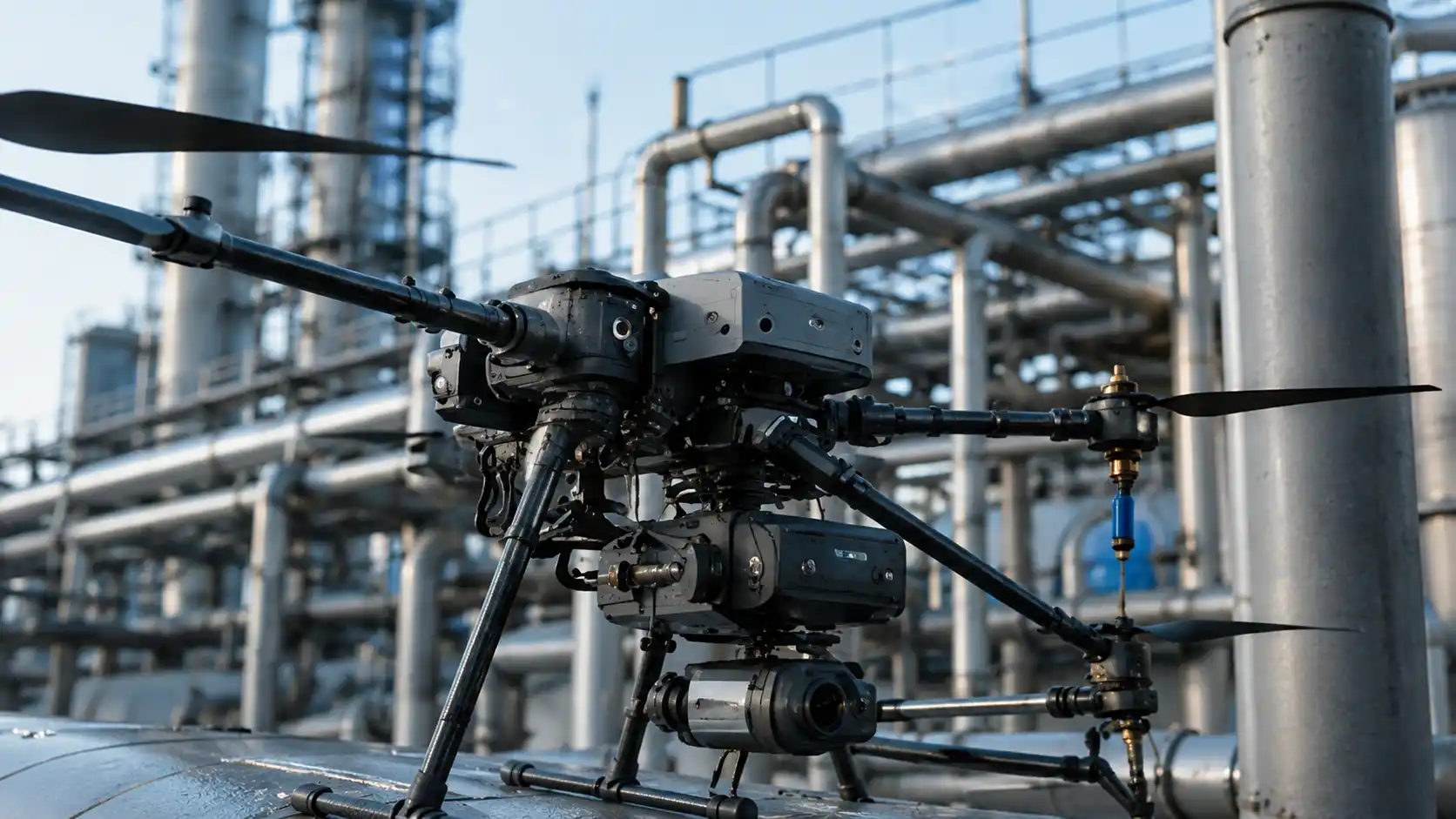
Depending on the facility, the platform may be an unmanned aerial vehicle, a ground robot, or another remotely operated system. It can carry application equipment designed to deliver selected chemistry to a defined surface or area.

A typical workflow may include assessing the area, selecting the appropriate platform, establishing a route or flight path, configuring application parameters, applying the selected chemistry, and documenting the operation.

This approach can turn a difficult manual task into a structured and repeatable process, which can be valuable for operators responsible for multiple sites or large infrastructure networks.

autonomous-decontamination-combines-robotic-mobility

Reducing Personnel Exposure

One of the strongest advantages of robotic decontamination is the ability to create distance between personnel and the treatment area.

Many maintenance tasks require workers to physically approach surfaces before they can clean or treat them. If those surfaces are elevated, difficult to reach, contaminated, or inside restricted areas, the work may require additional protective measures and specialized access equipment.

Drone-powered and robotic decontamination changes that relationship.

Instead of sending a worker directly to every surface, an autonomous platform can act as the application vehicle. Personnel can remain focused on mission planning, safety monitoring, chemistry preparation, system supervision, and post-operation review.

For critical infrastructure operators, this can create a more modern maintenance model: people manage the process while autonomous systems perform suitable portions of the physical application.

Reaching Difficult and Elevated Surfaces

Access is one of the most persistent challenges in industrial maintenance.

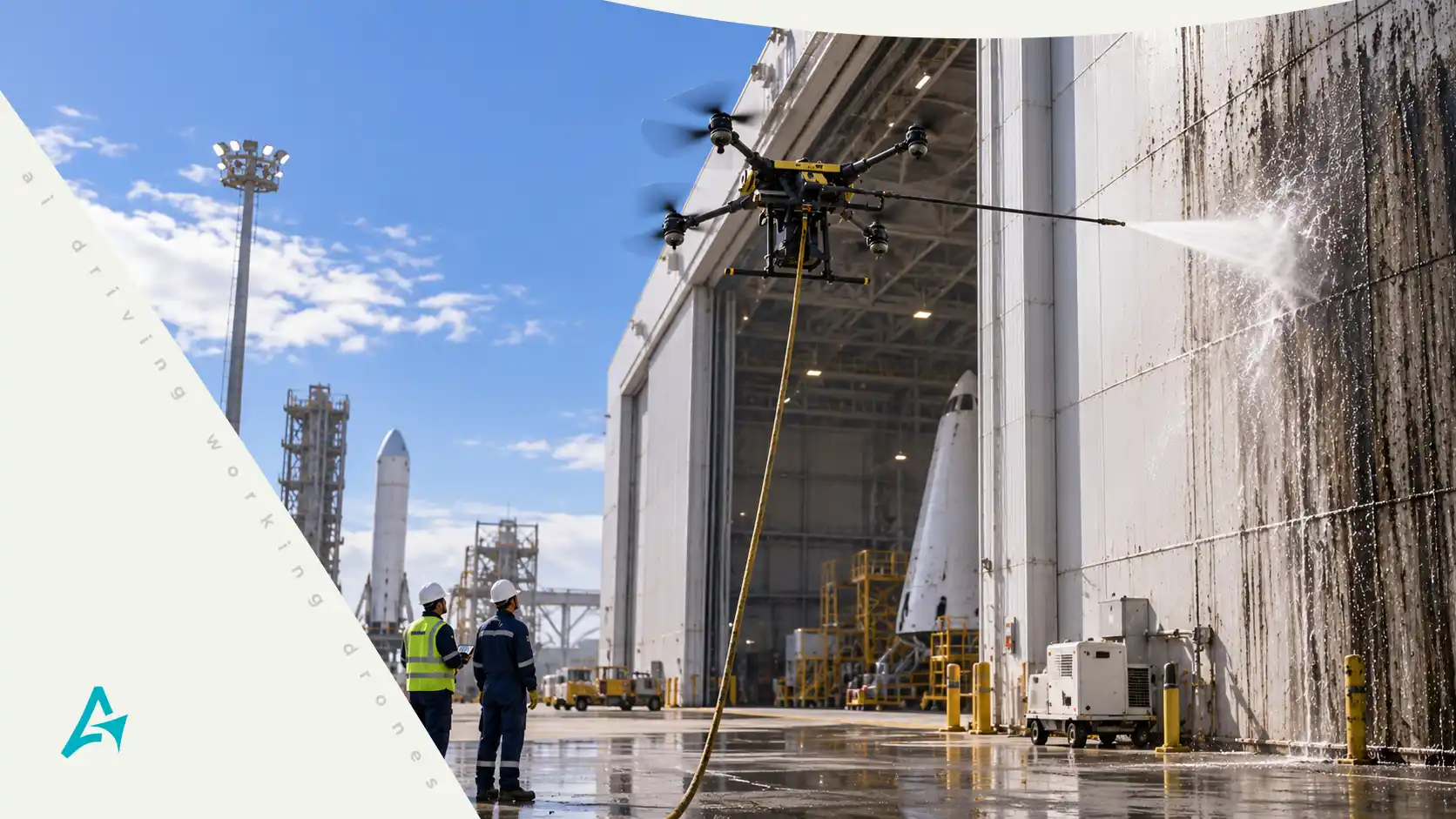
Aircraft hangars, energy facilities, manufacturing spaces, defense installations, and large technical buildings often contain elevated beams, ceilings, ducts, tanks, and equipment housings that require periodic treatment.

Reaching those areas manually can require lifts, scaffolding, specialized crews, or temporary closures.

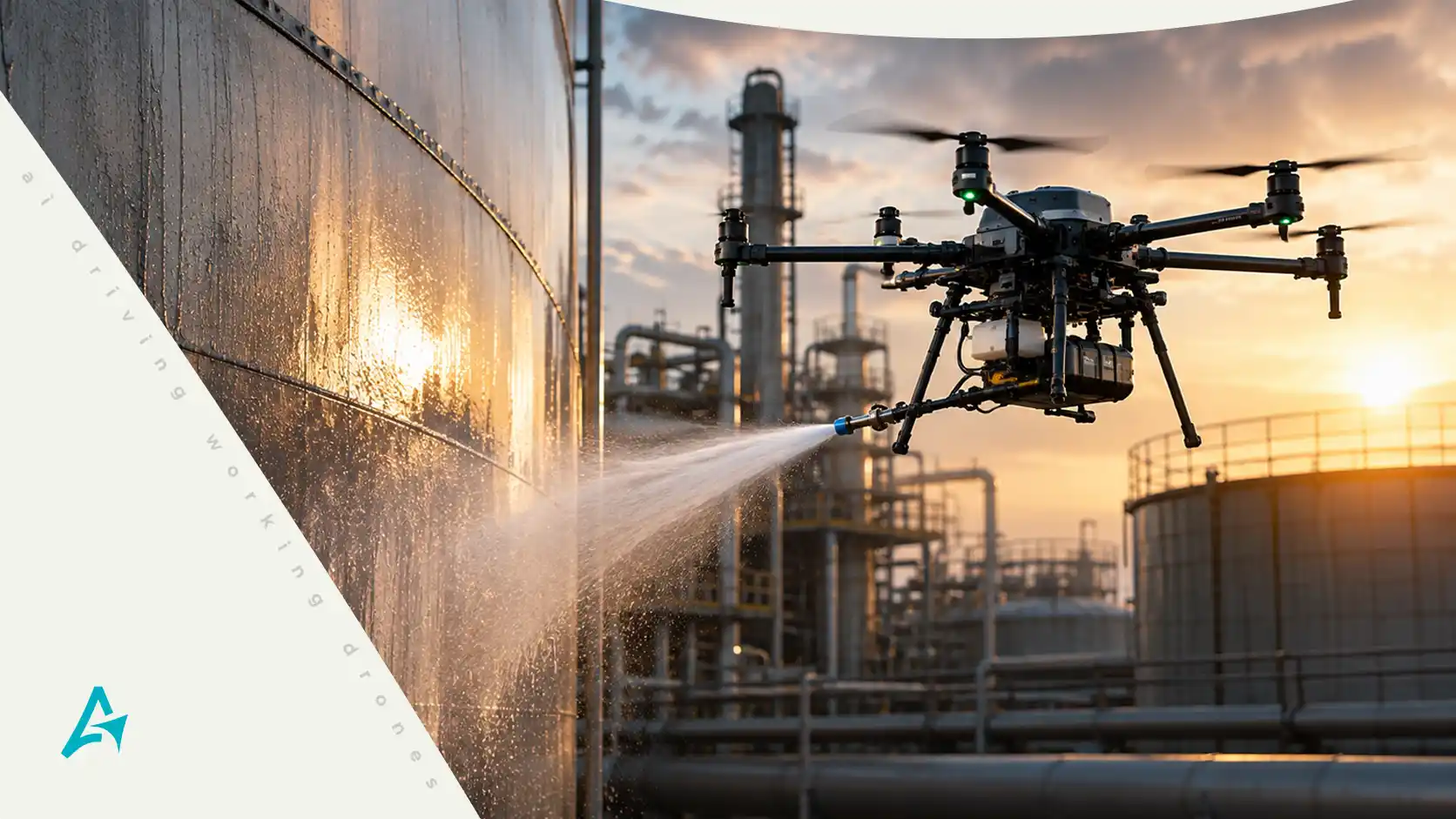
Autonomous aerial systems can offer a different approach. A properly configured drone can move vertically and laterally across a structure while carrying an application system. This allows treatment equipment to reach locations that would otherwise require people or large access machinery.

The operational advantage is simple: the application system goes to the surface instead of forcing the worker to go there.

Supporting More Consistent Application

Consistency matters in decontamination.

Manual application can vary because of operator positioning, fatigue, difficult access, differences between crews, or facility geometry. Robotic systems can help organizations create more repeatable application patterns.

A programmed drone route can define how the aircraft moves across a wall, structural system, or elevated surface. A ground robot can follow a mapped path through a facility. Application parameters can be configured around the requirements of the chemistry, surface, equipment, and environment.

This does not eliminate the need for human oversight. Instead, it gives operators another level of control.

Teams can define the process, monitor the operation, review results, and refine procedures over time. That repeatability is especially useful in mission-critical environments where maintenance processes need to be documented and performed with discipline.

More Efficient Maintenance and Reduced Disruption

Operational downtime is expensive.

Maintenance activities often compete with production schedules, aircraft movement, mission operations, logistics, inspections, and personnel access. Traditional decontamination may require substantial setup before treatment begins.

Robotic systems can reduce some of that physical setup.

Aerial platforms can move between treatment areas without requiring access structures for every location. Ground robots can also reduce the need for personnel to repeatedly enter certain zones.

When the application is well suited to automation, this can reduce operational obstacles and help facilities return to normal operations more efficiently.

Aerospace and Defense Applications

Aerospace and defense facilities present a unique combination of scale, sensitivity, access restrictions, and mission requirements.

Hangars may contain large aircraft, high ceilings, overhead structures, and controlled areas where maintenance activity must be carefully coordinated. Robotics can extend maintenance capabilities across these environments.

Aerial systems can treat elevated surfaces while ground systems can address lower structures and accessible areas. The two platforms can complement one another, with each performing the work best suited to its mobility.

This creates the potential for a layered autonomous maintenance strategy.

Aertek’s approach to Autonomous Robotics for Decontamination is designed around this operational flexibility. The objective is to match the system to the customer requirement rather than force every facility into a single method.

Integrating Chemistry with Robotic Application

The robotic platform is only one part of the solution.

Decontamination also depends on the chemistry, target surface, operating environment, and customer requirements. For that reason, chemistry and robotics should be considered as part of the same system.

Aertek plans to integrate ZeenKleen, a decontamination chemistry whose underlying technology has been tested by NASA, together with autonomous robotic application where appropriate for customer requirements.

The robot provides mobility and controlled access. The application equipment delivers the chemistry. The operating procedure defines where and how treatment occurs. Human operators provide planning, supervision, validation, and decision-making.

When these components work together, organizations can move beyond a simple cleaning tool toward a more complete decontamination capability.

Where Autonomous Decontamination Can Add Value

The potential applications extend across several categories of critical infrastructure.
Aerospace Facilities
Aircraft hangars and maintenance environments contain expansive vertical and horizontal surfaces. Robotic platforms may help reach elevated structures while reducing the need for personnel to work at height.
Defense Installations
Mission-critical facilities can benefit from technologies that support operational readiness while reducing unnecessary personnel exposure during suitable maintenance tasks.
Industrial Facilities

Manufacturing sites often include overhead structures, tanks, piping, and restricted areas. Autonomous systems can help extend the reach of maintenance teams.

Energy, Utilities, and Logistics

Large facilities, terminals, warehouses, and maintenance depots can include broad or difficult-to-access treatment areas. Robotic application can provide another tool for planned decontamination and maintenance.

Preparing for Autonomous Decontamination

Organizations considering autonomous decontamination should begin with the operational requirement, not the robot.

The first question should be simple: what problem needs to be solved?

Perhaps workers regularly need lifts to reach elevated surfaces. Maybe a facility contains zones that are difficult to enter. The organization may need more consistent coverage or want to reduce the time required for a recurring maintenance procedure.

Key considerations include:

  • Facility size and geometry
  • Indoor or outdoor conditions
  • Surface materials
  • Treatment chemistry
  • Required coverage
  • Obstacles and access restrictions
  • Personnel safety requirements
  • Sensitive equipment
  • Ventilation and airflow
  • Mission or production schedules
  • Documentation requirements
  • Applicable procedures and regulations


A site-specific approach is essential because no two critical-infrastructure environments are exactly the same.

Aertek’s Vision for Safer, Smarter Decontamination

Aertek is focused on autonomous robotics for aerospace, defense, and critical infrastructure, with decontamination as a key application area.

The company’s approach is straightforward: use autonomous technology where it can make maintenance safer, more efficient, and more consistent.

Drone-powered cleaning can reduce the need for personnel to access difficult areas while allowing application equipment to reach structures that are challenging with conventional methods. Ground robotics can extend that capability into other portions of a facility. Purpose-selected chemistry completes the treatment system.

The objective is not to automate every task. It is to identify the tasks where autonomy delivers a meaningful operational advantage and integrate the technology in a practical way.

Ready to Protect Your Critical Infrastructure?

Partner with AERTEK for autonomous exterior cleaning, infrastructure washdowns, specialized decontamination, facility maintenance, and digital reporting designed to improve safety, efficiency, and operational readiness.